
Card Draws
A simple technique that uses humour, hope, and team building to address negative behaviour.

Card Draws
I went chest to chest with a student once. I was a young teacher fresh out of university and a former football payer. I didn’t know anything about dealing with kids whose brains were flooded with adrenaline. I saw deescalation as a sign of being weak. My solution to bad behaviour was to employ the NYC bus transit rule of “might makes right”. Because it was the 90’s, none of us feared getting stabbed or shot by a student. Most times the kid backed down (again it was the 90s) but on this occasion the student did not. I matched his volume with a louder volume. When that wasn’t enough, I moved into his personal space. He reacted by stepping closer and bumping me like an angry baseball manager with the home plate umpire. After regaining my footing, I stepped to get back into his face, when another student got between us. The offending student overturned two desks, kicked open the door, and stormed down the hallway. I was left breathless and feeling victimized. How dare he? I knew this happened to other teachers, but this was me! Thank God cell phones were not around then. The student’s offence? He was late.
As I look back on this moment I am embarrassed as to how I handled classroom management. However, what truly troubles me, is that this type of confrontation was not uncommon in many high schools. My memory of being a high school student in the 80s and being a young teacher in the 90s is filled with examples of teachers using bullying tactics to control classrooms. The football field was worse. Grabbing facemarks, kicks in the backside, and drill sergeant spittle- yelling was commonplace.
If these techniques worked back then, that math no longer calculates. In the classroom, I found my discipline issues declined as the lessons became more engaging. On the football field I found that the less I made it about me, the more responsive players were to instruction.
However, there are still times when I need to hold young people accountable to the rules. My friend Coach Hugh Wyatt introduced me to a technique that combines humour, hope, and team building. This can be done through what we call, “Card Draws.” Card Draws are a pretty simple idea. When a young person breaks a rule, you give them the options of a straight forward punishment (stay after class/ run three laps), or take a card draw. The Card Draw involves four to five index cards that have various punishments on them and one “get out of jail free” card. This technique has allowed us to take a negative scenario and turn it positive.
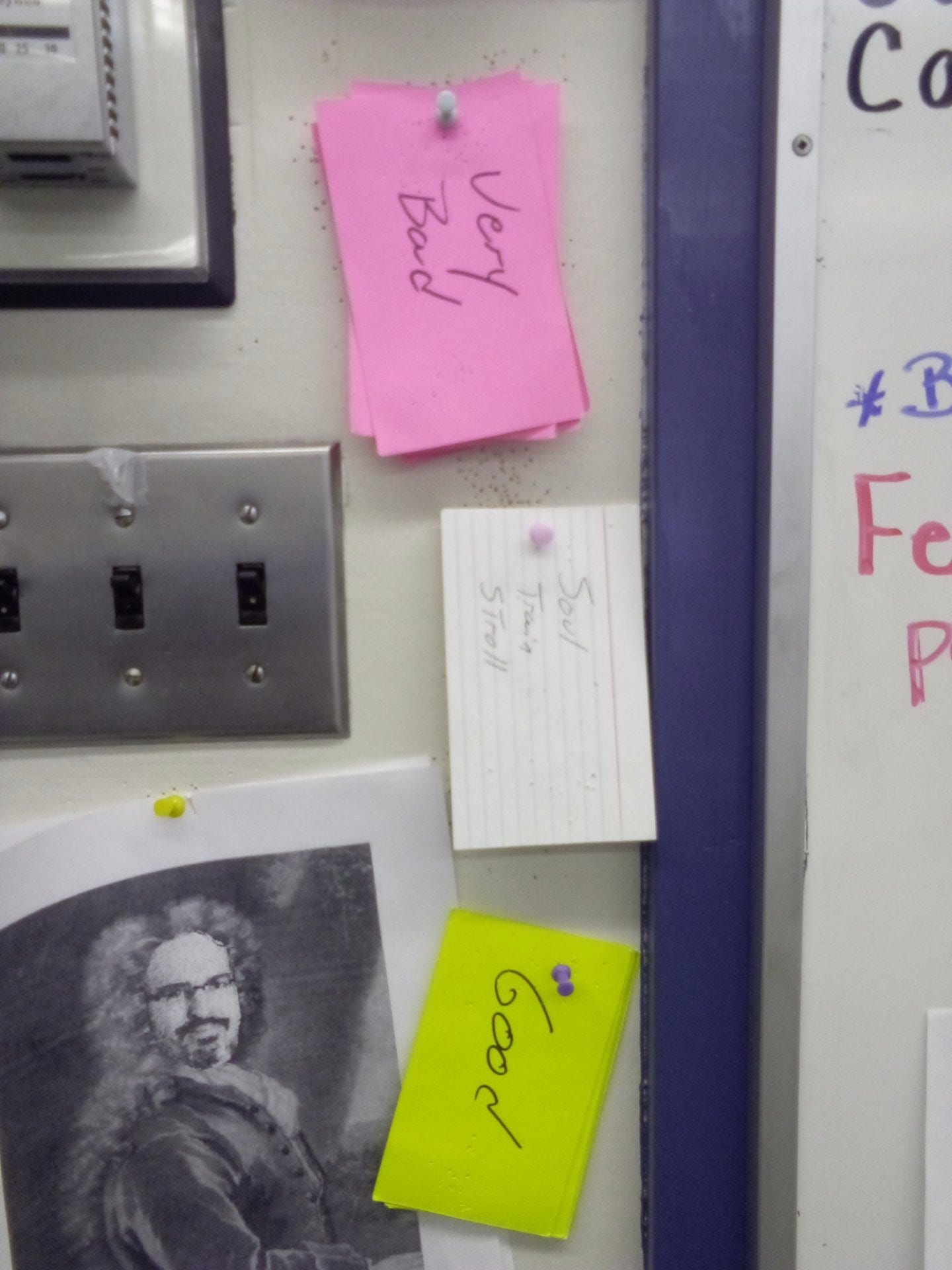
In the classroom our Bad Cards are reserved for students who come in late, or commit another minor transgression. Our current cards include:
Sombrero of Shame- if you draw this card you have to have your picture taken wearing a giant blue sombrero. Those pictures are then posted in the Wall of Shame.
Pig, Puppet, Song- if you draw this card, you have to come to the front of the classroom, put a pig puppet on your hand, and sign it a song.
Soul Train Stroll- if you draw this card the entire class goes into the hallway and line up against the lockers like a gauntlet. The offender then needs to dance their way from the beginning of the gauntlet to the classroom. While this is happening the other students perform a grapevine step and clap in unison.
Classroom Dance Party- if you draw this card, you get to sit while the entire class stands and dances to Smooth Criminal for 30 seconds.
Get Out of Jail Free- no punishment.
These choices are all funny to watch. It is not uncommon for other classes to joyously join in when they hear someone has to do the Soul Train Stroll. However, the effectiveness of this strategy goes beyond just humour. It releases endorphins in the brain. Neurologists believe that the endorphin enkephalins are released when people feel hope. This endorphin mimics the effects of morphine. The hope of drawing a Get Out of Jail card releases this endorphin and the student receives an organic high. You can actually see the effects on the student’s face as they ponder which card to pick.
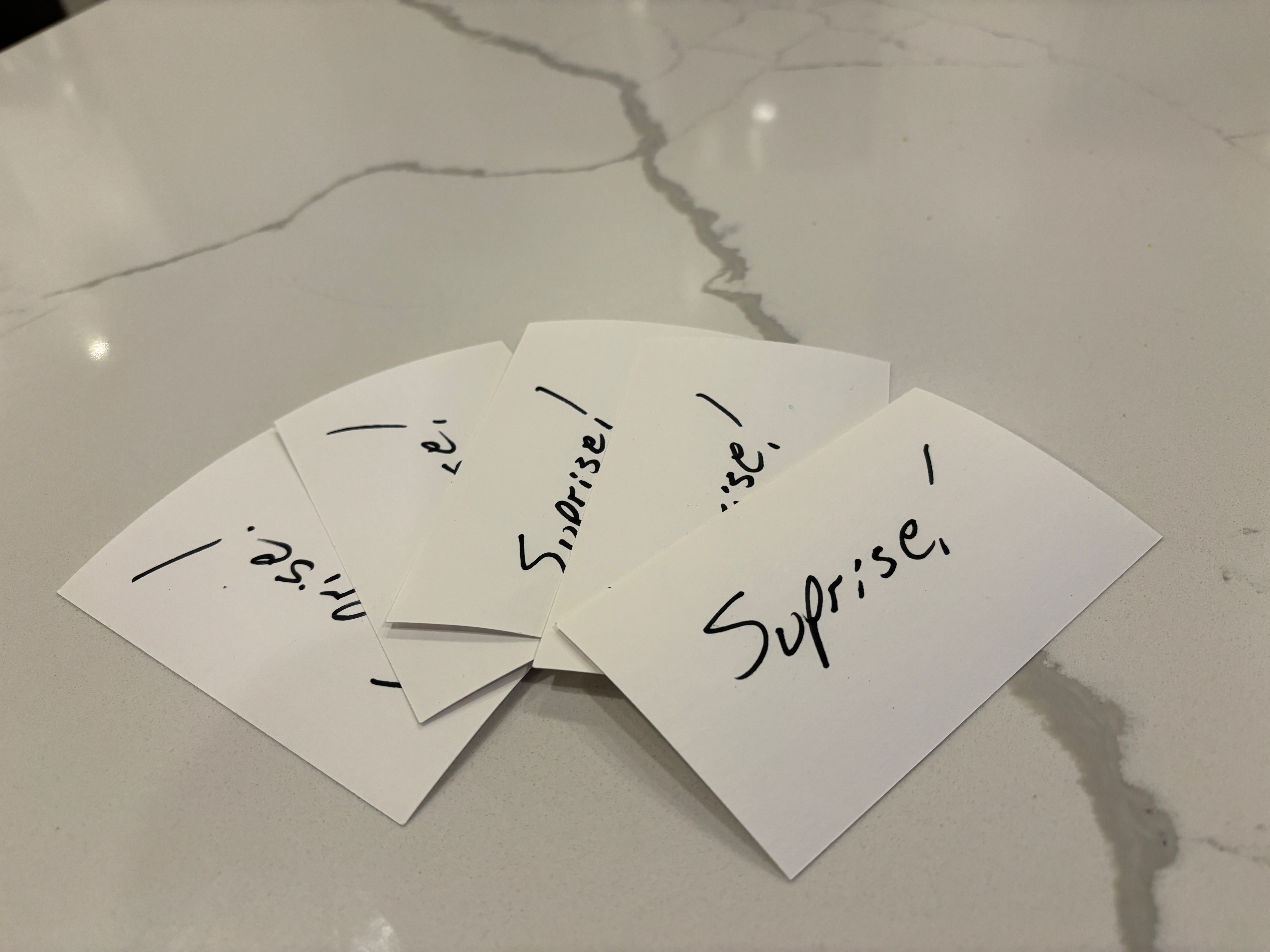
On the football field we also use card draws, but we call them Surprise Cards. We bring them out whenever a player negatively surprises us. This could be arriving late, forgetting a piece of equipment, or needing to leave early. When you manage 40 kids, over three months, all of these things are bound to happen. However, a coach should never be informed of these issues 30 seconds before practice starts. We call that a “surprise!”. When coaches are surprised, the offending player is given the choice of three laps after practice or a card draw. Our Surprise Cards consist of the following:
40 yard pencil roll- this is when the player lies flat on the ground and rolls for 40 yards. It is surprisingly brutal. I remember one boy claiming he would not be able to have children after this exercise.
25, Five and turns- the player gets in a stance, sprints five yards, turns around, gets back in a stance, and then sprints five yards again.
3 Sabre Makers (exercise formally known as Man Makers)- the player sprints five yards and back, ten yards and back, fifteen yards and back, twenty yards and back.
Bee Hive Run- the entire team must run a lap around the filed while clumping together shoulder to shoulder.
Get Out of Jail Free- no punishment.
When a player chooses the card draw, we see a unique form of team building. As the cards are presented, the rest of the team gathers around and watches with intense concentration. If the player draws a punishment card, the team erupts in cheers. If the player draws the Get Out of Jail Free card, the other players howl in discontent while the offender skips away. Recently, I have noticed a new trend; with the addition of the Bee Hive Run card, the coaching staff becomes involved. If a player pulls this card, I have seen the coaching staff erupt into cheers, as vindication that the entire team should be punished for the transgression.
Card draws have been a great addition to both my classroom and football team. I do reserve the right to punish directly for serious transgressions. However, this strategy has allowed us to use humour, hope, and team building, when addressing minor negative behaviour. Unlike cell phones, I wish this had been around when I first started teaching.